THE ILLNESS YOU CAN’T SEE… BUT CAN FEEL EVERY SINGLE DAY
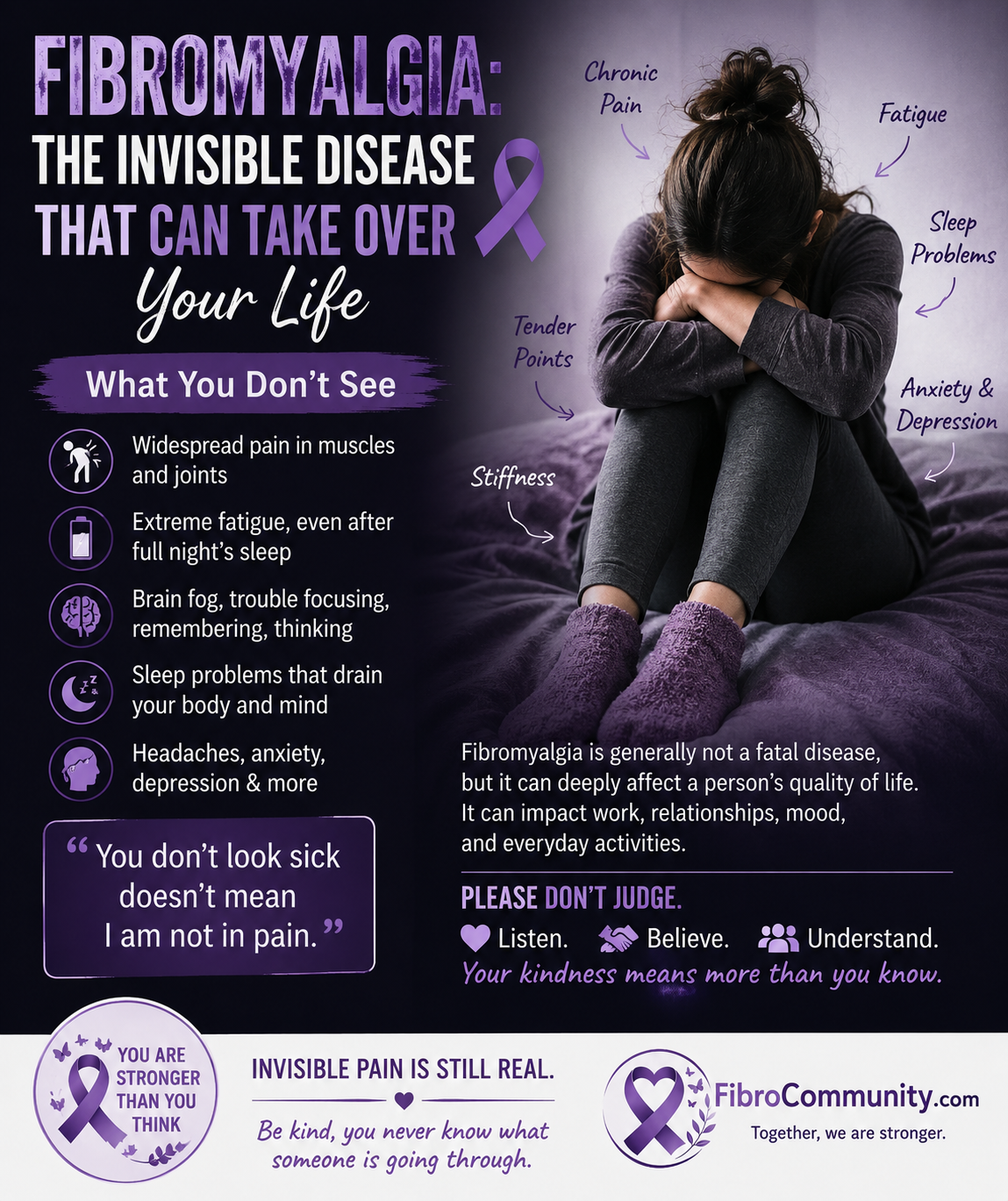
“You don’t look sick.”
For someone living with fibromyalgia, these four words can hurt more than people realize.
Because what you see is a person standing, walking, smiling, talking, and trying to live a normal life.
What you don’t see may be completely different.
You don’t see the pain spreading through their body.
You don’t see the exhaustion that makes getting out of bed feel like a huge task.
You don’t see the nights when they sleep for hours but wake up feeling as if they never rested.
You don’t see the brain fog—the moments when finding the right words, remembering something simple, or concentrating on a task suddenly becomes difficult.
And you definitely don’t see how much energy it can take just to pretend everything is okay.
Fibromyalgia is an invisible battle.
It can cause widespread pain, fatigue, sleep problems, and cognitive difficulties. And because there may be no obvious physical sign, people living with it are sometimes misunderstood or even accused of exaggerating.
But looking healthy does not mean feeling healthy.
A person can be smiling while fighting pain.
A person can be working while completely exhausted.
A person can say “I’m okay” simply because they are tired of explaining what they are going through.
Fibromyalgia is generally not a fatal disease, but living with persistent pain and fatigue can seriously affect a person’s quality of life.
So the next time someone tells you they are in pain, don’t immediately judge them because they look fine.
Listen.
Believe them.
Show compassion.
Because some of the hardest battles in life leave no visible scars.
Not all pain is visible. But that doesn’t make it any less real.
If you know someone living with invisible pain, share this. Someone may need to feel understood today.
THE DISEASE THAT CAN MAKE YOU LOOK FINE WHILE YOU’RE FALLING APART INSIDE
“But you look perfectly healthy…”
For someone living with fibromyalgia, this sentence can be incredibly painful.
Because looking healthy and feeling healthy are two completely different things.
Imagine waking up after eight hours of sleep and still feeling as though you haven’t rested at all.
Imagine getting out of bed with pain running through different parts of your body.
Imagine wanting to do normal things—go to work, clean your home, meet your friends, spend time with your family—but your body simply doesn’t cooperate.
Now imagine having to explain all of this to someone who says:
“Maybe you’re just tired.”
This is what makes fibromyalgia so difficult to understand.
There may be no visible wound.
No broken bone.
No obvious swelling.
No dramatic sign that tells the world, “This person is suffering.”
Yet the pain can be very real.
Fibromyalgia is often called an invisible illness.
People living with it may experience widespread pain, severe fatigue, sleep difficulties, and problems with concentration or memory.
Some days may be manageable.
Other days can feel like a completely different story.
A person may wake up feeling exhausted before the day has even started.
They may cancel plans—not because they don’t care, but because their body is telling them that it needs rest.
They may miss work.
They may struggle to concentrate.
They may need more time to complete ordinary tasks.
And sometimes, they may simply sit quietly because they don’t have the energy to explain what they are feeling.
But from the outside?
They may look completely normal.
That’s where misunderstanding begins.
People may think they’re lazy.
They may think they’re making excuses.
They may say:
“You were fine yesterday.”
“You don’t look sick.”
“You need to exercise more.”
“You’re thinking too much.”
But chronic illness doesn’t work that way.
A person’s condition can change from one day to the next.
Someone who was able to go shopping yesterday may struggle to get out of bed today.
Someone who smiled at dinner last night may be in significant pain this morning.
And someone who says, “I can’t do it today,” may already have spent hours fighting their body just to get through the morning.
The hardest part isn’t always the pain.
Sometimes, it’s being misunderstood.
Imagine being in pain and feeling like you have to prove that your pain is real.
Imagine being exhausted and feeling guilty for needing rest.
Imagine wanting people to understand you, but not having the words to describe something they cannot see.
That’s the reality many people with invisible illnesses face.
Fibromyalgia is generally not considered a fatal disease, but that doesn’t mean it should be ignored or treated as something insignificant.
Persistent pain and fatigue can affect almost every part of a person’s life—work, sleep, relationships, social activities, and emotional well-being.
And this is why compassion matters.
You don’t have to understand someone’s pain perfectly to respect it.
You don’t have to see an illness to believe someone is suffering.
Sometimes the kindest thing you can say is simply:
“I believe you.”
So remember this:
The person who keeps cancelling plans may not be avoiding you.
The person who sleeps a lot may not be lazy.
The person who looks perfectly fine may not actually be fine.
And the person who smiles every day may still be fighting a battle that nobody knows about.
Not every illness has a visible scar.
Not every painful battle can be seen.
And not everyone who looks strong feels strong inside.
If you know someone living with fibromyalgia or another invisible illness, give them patience instead of judgment.
Give them understanding instead of criticism.
Give them support instead of making them prove their pain.
Because sometimes, the strongest people are the ones quietly fighting battles nobody else can see.
Invisible pain is still pain.
Invisible illness is still illness.
And every person deserves to be heard.
If this message made you think of someone, share it. You never know who may be silently struggling today.