Monoclonal Antibodies (mAbs) for Infectious Disease
Passive immunization for post-exposure prophylaxis or adjunct therapy has been successfully used for over a century to treat suspected exposure or infection against a range of diseases, such as rabies, diphtheria, tetanus, and hepatitis B. For most of these diseases, the immunoglobulin preparations administered to patients have been derived from immunized horses, immunized humans, and in some cases from convalescent patients. However, these products have presented several challenges including standardization of production, safety, supply and access, which has led many groups to explore replacing these products with monoclonal antibodies (mAbs).
In addition to potentially addressing the production, safety and supply limitations of blood-derived immunoglobulins, anti-infective mAbs may offer, for some infectious diseases, prophylactic or therapeutic interventions where effective treatments are not available or where vaccines remain elusive. Furthermore, anti-infective mAbs could be used to target multi-drug resistant pathogens, and may also contribute to reduced rates of antimicrobial resistance (AMR).
Although protection is short-lived, passive immunization with monoclonal antibodies has some advantages over active immunization with vaccines
Monoclonal Antibody Therapies for Infectious Diseases
Abstract
In contrast to therapy in oncology and immune-related diseases, where dozens of monoclonal antibodies (mAbs) have been introduced, often in transformative fashion, the use of mAbs for infectious diseases is generally underdeveloped, with fewer than a dozen mAbs currently licensed for the treatment of microbial diseases. This situation is paradoxical given that antibodies are major products of the immune system for protecting against infectious diseases. The underdevelopment of mAbs for infectious diseases has several causes including the availability of effective therapy against many microbial diseases, the fact that many pathogenic microbes are antigenically diverse and thus all strains are not covered by a single mAb, and the high expense of mAb therapies. Despite these hurdles the number of mAbs licensed for infectious disease indications is slowly increasing and there are numerous opportunities for the development of mAbs in the prevention and treatment of microbial diseases.
Monoclonal antibodies: their place in applied medicine and their role in the newest infectious disease – history, present, and future. Literature review
Abstract
Monoclonal antibodies (mAbs) are immunoglobulins with practically absolute specificity (monospecificity) for a particular antigen (epitope). Over the past three decades, monoclonal antibodies have undergone a remarkable transformation, evolving from their use predominantly as research tools to becoming increasingly powerful therapeutic agents in medical practice. Personalized therapy and targeted treatment of diseases form the cornerstone of modern medicine’s revolutionary capabilities. Monoclonal antibodies are a shining example of personalized therapy, developed based on deep and continuously growing knowledge in the fields of immunology, molecular biology, and biochemistry. The accepted nomenclature for monoclonal antibody names indicates their origin: murine (-omab), chimeric (-ximab), humanized (-zumab), or recombinant (-umab). Monoclonal antibodies belong to the IgG class. Monoclonal antibodies of this class possess specific properties and advantages. They are characterized by optimal pharmacokinetics, stability, and low immunogenicity (especially recombinant forms), a low toxicity profile, and the capacity for large-scale production of specific monoclonal antibodies targeting diverse antigens. The mechanisms of action of monoclonal antibodies include direct cell toxicity, immune-mediated cell destruction, vascular destruction, and immunomodulatory functions. The pathophysiology of many conditions treated with monoclonal antibodies is equally intricate, involving numerous cells and molecules. Monoclonal antibodies, in general, are characterized by good tolerance. The scientific community continues its efforts to enhance their efficacy, reduce their immunogenicity, and molecules. Monoclonal antibodies, in general, are characterized by good tolerance. The scientific community continues its efforts to enhance their efficacy, reduce their immunogenicity, and optimize their pharmacokinetic properties, as well as attempts to achieve oral (mucosal) bioavailability. The use of monoclonal antibodies in modern medicine is continuously expanding, with their incorporation into therapeutic regimens for numerous severe non-malignant diseases such as asthma, atopic dermatitis, migraine, hypercholesterolemia, osteoporosis,
bacterial infections (e.g., anthrax), and viral infections (such as COVID-19). Efforts are being directed not only at improving the structural and functional properties of existing monoclonal antibodies but also at creating new types of antibodies with smaller molecular weights and higher specificity. As a next generation of nanobiotechnology, natural and synthetic nanobodies have been utilized in numerous fields of biomedicine, including as biomolecular materials, for various biological studies, and in medical diagnostics and immunotherapy. Monoclonal antibodies and antibody-based molecules offer a reliable opportunity to effectively counter emerging viral pathogens and antibiotic-resistant bacteria. When administered to patients with a healthy immune system, they can provide necessary prophylaxis against specific diseases, acting as vaccine-like molecules and promoting long-term, antimicrobial-specific immune responses. Monoclonal antibodies have been identified as a potentially effective therapy for preventing
the progression of COVID-19 in patients at high risk of developing severe disease.
Keywords
monoclonal antibodies, COVID-19 infection, therapeutic agents, antibody-based molecules, biological products, pharmacokinetics, pharmacodynamics, specificity, efficacy, immunogenicity
History of monoclonal antibodies and their path through modern medicine
Monoclonal antibodies (mAbs) are immunoglobulins with practically absolute specificity (monospecificity) for a particular antigen (epitope) (LiverTox 2012). Over the past three decades, monoclonal antibodies have undergone a remarkable transformation, evolving from their use predominantly as research tools to becoming increasingly powerful therapeutic agents in medical practice (Singh et al. 2018). Personalized therapy and targeted treatment of diseases form the cornerstone of modern medicine’s revolutionary capabilities. Monoclonal antibodies are a shining example of personalized therapy,
developed based on deep and continuously growing knowledge in the fields of immunology, molecular biology, and biochemistry (Malik and Ghatol 2025).
The earliest documented (indirect) antibody-based therapy dates back to 1796, when Dr. Edward Jenner inoculated pustular material from smallpox lesions into a recipient to induce immunity. This not only marked Jenner as the father of immunology but also laid the foundation for the principles of vaccination. However, the use of monoclonal antibodies in humans was not established until 1975, when Köhler and Milstein conducted their pioneering work (Bayer 2019). The concept of using monoclonal antibodies as therapeutic agents is rooted in the functions of the immune system, particularly the humoral immune response—the synthesis of specific antibodies in response to encountering foreign antigens (Tiller and Tessier 2015).
Antibodies produced as part of this immune response are proteins with high specificity and affinity for the specific antigen or molecule that triggered their generation.
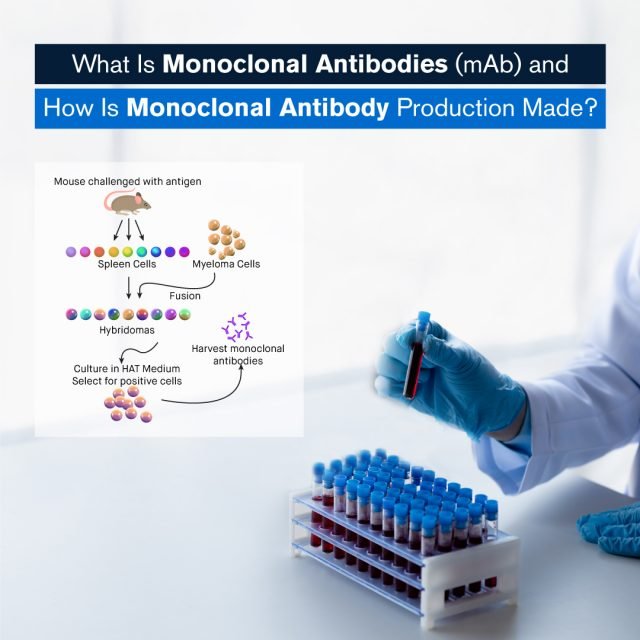
Köhler and Milstein utilized these fundamental immunological principles to create the so-called “hybridoma” (a cell resulting from the fusion of myeloma cells and spleen-derived B-lymphocytes from mice) (Posner et al. 2019). The hybrid cells thus generated enabled the production of a particular clone of antibodies with selective specificity in large quantities— referred to as monoclonal antibodies. However, the early biotechnology for producing these “primitive” monoclonal antibodies soon encountered a critical limitation: the inability to use these antibodies for long-term therapy due to their immunogenicity and the rapid development of human anti-murine antibodies (HAMA). In addition to rapid clearance due to HAMA, subsequent applications of monoclonal antibodies could induce IgE production, leading to anaphylactic reactions in patients (Castelli et al. 2019).
Despite the challenges associated with the murine origin of the first monoclonal antibodies, research continued, leading to the development of alternative production methods that overcame these limitations. Chimeric clones represented the next step, where murine Fc regions were replaced with human Fc regions obtained through crystallization (Shepard et al. 2017). Examples of chimeric monoclonal antibodies include Infliximab and Rituximab.
Chimeric clones were followed by the development of “humanized” mAbs, where murine protein loops (acting as ligand-binding domains) were implanted into human immunoglobulins. Examples of monoclonal antibodies in this category include daclizumab and trastuzumab. The culmination of continuous advancements in monoclonal antibody production was the refinement of recombinant mAbs, which are identical to human-derived monoclonal antibodies. Recombinant mAb technology minimizes the risks associated with earlier versions. The accepted nomenclature for monoclonal antibody names indicates their origin: murine (-omab), chimeric (-ximab), humanized (-zumab), or recombinant (-umab) (LiverTox 2012).
The mechanisms of action of monoclonal antibodies
There are five classes of antibodies classified based on the type of heavy chains they contain: immunoglobulins IgM, IgD, IgG, IgE, and IgA (Tiller and Tessier 2015). Each class performs a specific, highly specialized function in the human body. The largest proportion belongs to IgG immunoglobulins. This class is further subdivided into four subclasses based on structural characteristics (location and quantity of disulfide bonds). Monoclonal antibodies belong to the IgG class (Buss et al. 2012). Monoclonal antibodies of this class possess specific properties and advantages. They are characterized by optimal pharmacokinetics, stability, and low immunogenicity (especially recombinant forms), a low toxicity profile, and the capacity for large-scale production of specific monoclonal antibodies targeting diverse antigens. Complementarity-determining regions located in the antigen-binding fragment (Fab) of a particular antibody play a crucial role in determining specificity and affinity for the target epitope. This selectivity limits effects on other cells and systems. The Fc fragment, another specific region of the antibody, consists of constant domains and has the ability to activate the immune system against the antigen targeted by the monoclonal antibody. These complex functions are mediated through interactions with Fc receptors expressed on various endogenous cells and the complement system, triggering effector cascades targeting the monoclonal antibody’s antigen (Castelli et al. 2019; Malik and Ghatol 2025).