I have fibromyalgia and scoliosis with low back pain. Please explain my MRI findings.
Hello doctor,
I am a 29-year-old female. I have low back pain with bilateral hiop and leg pain to the knees for several years. I have fibromyalgia, scoliosis and my left leg is 7m shorter than my right leg.
My MRI result indicates:
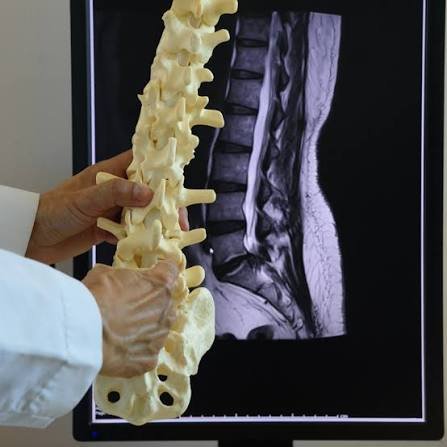
Large broad-based right paracentral disc protrusion at L4-5 and compresses the descending right L5 root and encroached on the descending left L4 root. The disc causes moderate to moderately severe central canal stenosis.
Shall central protrusion at L5-S1 contacts the descending right S1 root. No nerve root compression is identified. Mild degenerative template signal L4-5 noted.
Can you explain these to me in labor terms and suggest the most likely treatment options? I have don’t just about everything but surgery and chiropractic care have been the most effective but I have had chronic pain for years, sometimes debilitating. Is rather not have surgery but is it inevitable? My ana test is negative. I am currently taking Gabapentine.
Hello,
Welcome to icliniq.com.
Vertebrae has a central canal where the nerves from the brain run to reach the legs. At each vertebrae level, there is a shock absorber called the disc. Often this gets displaced due to the pressure put on it and it starts to put pressure on the nerves that run down the leg leading to what is called sciatica.
You have a disc between number 4 and 5 vertebrae that is the source of your pain in the legs more so than your spine and lower back. You have not sent me the films for me to judge the actual size of the disc, not everyone requires surgery. You should be on Pregabalin 75 mg twice a day. You should be having physiotherapy or chiropractic treatment which seems to be working. If a good trial of six weeks to three months is over and you have more leg symptoms than back, then you need attention surgically.
Lower Back Pain
Lower back pain is very common. It often results from a strain (injury) to muscles or tendons in your back. Other causes include arthritis, structural problems and disk injuries. The pain often gets better with rest, physical therapy and/or medication.
What is lower back pain?
Lower back pain affects the lumbar region of your spine or back. It can result from many different injuries and conditions. Most often, the cause is an injury to muscles or tendons in your back.
Nearly everyone experiences lower back pain at some point in their lives. The pain can range from mild to severe. For most, it’s temporary. But long-lasting (chronic) lower back pain is also common — up to 23% of adults worldwide have chronic lower back pain. In extreme cases, lower back pain can make it difficult or impossible to walk, sleep, work or do everyday activities.
Given how common it is, it may be hard to tell if you should be worried about your lower back pain. Trust your gut and reach out to a healthcare provider if something feels off — or if the pain keeps you from going about your usual activities.
Symptoms and Causes
What are the symptoms of lower back pain?
Lower back pain can involve a wide spectrum of symptoms. Lower back pain may:
- Come on suddenly or appear gradually.
- Happen after a specific event, like bending over to pick something up. You may hear a “pop” when it happens.
- Have an unknown trigger.
- Feel sharp or dull and achy.
- Come and go or be persistent.
- Radiate down to your buttock or down the back of your leg (sciatica).
Feel worse in certain positions (like bending over or crouching down) and get better when lying down.
Normal Imaging Studies But Still Have Low Back Pain?
Back pain commonly happens due to conditions like degenerative disc disease, osteoarthritis, scoliosis, infections, etc. It can also occur due to improper posture, prolonged sitting, heavy lifting or any kind of trauma. It can possibly happen due to muscle tension or strain because of uncomfortable strenuous activities.
The bones, ligaments, discs, and nerves make up our spine. It might be difficult to determine the precise cause and origin of pain because of all these factors. It’s possible that the root of your back discomfort is not where you experience it. Anatomical structures such as the lower back muscles, vertebral joints and bones, intervertebral discs, spinal nerve roots, and/or abdominal organs might all have issues.
Why Normal Imaging Does Not Always Explain Back Pain?
Generally, to identify the exact cause of back pain, imaging techniques like X-rays, MRIs are prescribed. X-rays primarily show bony structures, whereas MRI provides detailed images of soft tissues and spinal anatomy. These tests help physicians rule out many structural causes of pain. However, in some cases, imaging results appear normal while the patient continues to experience severe pain. Normal imaging does not always mean the absence of pain, as some causes cannot be detected through imaging studies. There could be various hidden causes of back pain that can’t be found out on imaging.
Neuropathic back pain can occur when your nerves send your brain incorrect pain signals. Back pain can be caused by psychological issues such as stress, worry, sadness, and fear. Both the beginning of pain and the development of chronic pain may be impacted by all these factors, which cannot be shown on imaging. Pain due to herniated disc, spinal canal stenosis, scoliosis, spondylosis, etc., can be ruled out with the help of imaging techniques. If imaging is normal but still pain persists, a physician might go for other options to rule it out.
The following might be the reason for Back Pain that can’t be detected on MRI.
1. Fibromyalgia: Although physical trauma has been recognized as a potential trigger, the precise causes of many persistent discomforts like fibromyalgia are still unknown. Despite influencing the patient’s everyday functioning, this “invisible” but crippling disorders frequently go undetected on diagnostic imaging because they lack a recognizable anatomical hallmark.
Chronic Pain Syndrome (CPS): It is a condition of persistent pain that lasts more than 3 months. It is a complex condition that involves psychological, biological, and social factors. Types of CPS are myofascial pain syndrome, complex regional pain syndrome, chronic fatigue syndrome, etc. It is challenging to diagnose chronic pain syndrome as the roots of CPS is difficult to find.
See a Back specialist Pune for top notch treatment…
Pregnancy-Related Pain:
- Hormonal Changes: Pregnancy hormones such as relaxin cause ligaments and joints, particularly in the pelvic region, to relax, which can cause pain and instability.
- Weight Gain: The spine and back muscles are strained by the additional weight of the developing foetus and uterus, which may lead to back pain.
- Changes in Gravity Centre: Your centre of gravity changes as your uterus expands, which can cause posture issues and back discomfort.
- Uterine enlargement: Back pain may result from muscle separation brought on by uterine enlargement. The uterus extends to the bottom of the rib cage from the pubic area, which can strain back muscles as well.
- Weakening of Abdominal Muscles: During pregnancy, the abdominal muscles weaken and stretch, which can lead to back pain and bad posture.
- Piriformis syndrome: Referred back pain due to piriformis muscle occurs due to muscle tightness, overuse, trauma, or weakness of the muscle. This pain may be felt in the low back or radiating pain in the lower limbs, but the real problem could be piriformis syndrome, which is causing discomfort. This can be missing on Imaging as it can’t be detected on MRI or X-ray.
5. Renal Calculi: Particularly when a kidney stone lodges in the ureter and obstructs urine flow, it can start with excruciating, acute pain and cramping in the flanks and back that may spread to the lower part of the abdomen and groin region.
6. Hernia: Hernias are typically associated with pain in the bulging area (like the groin or abdomen); in some cases, they can cause or contribute to back pain.
- Large or strained inguinal hernia: It can cause lower back discomfort because it alters posture or gait, however, they are mostly linked to groin pain.
- Femoral Hernia: Femoral hernias can also have an indirect effect on the back because of their proximity to the thighs and lower abdominal region. This can result in changes in posture or gait that cause back pain.
7. Depression, PTSD, and Other Mental Health Conditions:
Accident-related emotional and psychological damage can be just as detrimental as physical injuries, despite not being visible on MRIs. Pain symptoms may be inwardly invisible in conditions like post-traumatic stress disorder (PTSD) and depression/anxiety brought on by an accident.
8. Cluneal Neuralgia:
Cluneal neuralgia involves irritation or entrapment of the superior, middle, or inferior cluneal nerves that supply sensation to the skin over the buttocks. Patients often complain of burning or stabbing pain over the lower back, buttock, mimicking low back pain. This condition is commonly missed due to normal MRI or X-ray findings. It may worsen with prolonged sitting, bending, or pressure over the gluteal region.