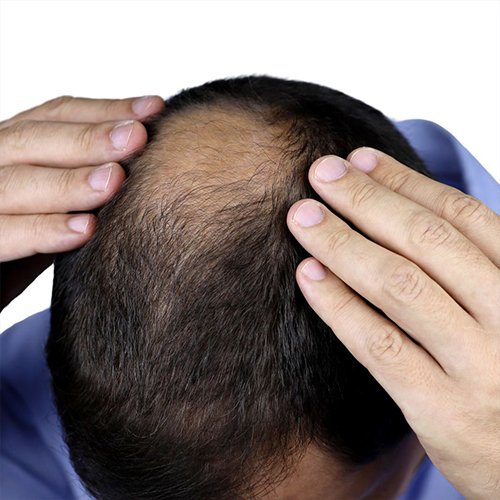
Though more studies are needed, researchers believe there’s enough evidence to consider hair loss an ‘indicator of active disease’ in lupus.
Hair loss can be a common symptom of lupus, as body-wide inflammation can impact the skin and hair follicles. Most of the time, people who get diagnosed with systemic lupus (the most common kind) find that their hair grows back once they start treatment, but that’s not always the case.
According to a new study, lupus patients whose hair loss persists or comes back after abating might have higher levels of disease activity.
The study, which was published in the Journal of the American Academy of Dermatology, only included 32 patients, so it’s too small to draw any widespread conclusions about what hair loss might mean for most people with lupus. Still, the researchers believe there’s enough evidence to consider hair loss an “indicator of active disease.”
In the study, researchers examined 32 lupus patients with different patterns of alopecia (the medical term for hair loss): 14 had mild alopecia; five had severe alopecia; nine had patchy alopecia; and four had “lupus hair,” which refers to fragile/broken hair along the hairline. They analyzed hair samples and scalp biopsies from these patients and conducted the same analyses on an additional 10 participants who had lupus but no signs of alopecia.
Although they found some differences between the alopecia and non-alopecia groups, the biggest distinction was that disease activity was higher in people who had hair loss. The study authors used the SLEDAI-2K assessment score to measure disease activity and found that it was “significantly higher in patients with alopecia when compared to patients without alopecia.”
They also noted that the samples from people who had hair loss often showed abnormalities in the small blood vessels as well as thin hair shafts. These characteristics and others suggest hair loss in lupus patients is “is indeed [lupus] specific and may involve a more complex mechanism than that of [telogen effluvium], which is a condition that occurs when hair follicles get pushed into a resting state.
Track Your Lupus Disease Activity
Join CreakyJoints’ patient-centered research registry to track your symptoms, disease activity, and medications — and share with your doctor.
Fibromyalgia vs. Lupus: What’s the Difference?
While lupus and fibro may have some symptoms in common, they are ultimately distinct conditions with very different causes and treatments.
Fibromyalgia and lupus are both chronic diseases with no cure, can both cause some similar symptoms, and can both take a long time to get the right diagnosis. But fibromyalgia — often called fibro — and lupus are two very distinct health conditions with very different causes and treatments, despite having some features in common.
Lupus is an autoimmune disorder that involves widespread inflammation and impacts many organs throughout the body. Fibromyalgia a disorder that causes widespread chronic pain and tenderness. Unlike lupus, fibromyalgia is not an inflammatory or autoimmune disease.
Still, many signs and symptoms of fibromyalgia and lupus overlap and it’s not uncommon for fibromyalgia to be misdiagnosed as lupus, says rheumatologist George Stojan, MD, an assistant professor of medicine at Johns Hopkins University School of Medicine and co-director of the Johns Hopkins Lupus Center in Baltimore, Maryland. Both fibromyalgia and lupus can cause muscle/joint pain, brain fog, and fatigue. Both are also more likely to occur in younger and middle-aged women.
Interestingly, another factor that makes fibromyalgia and lupus difficult to differentiate from each other is that some people have both at the same time. “Having both lupus and fibromyalgia is extremely common,” says Dr. Stojan. “In our cohort here at Hopkins about 30 percent of lupus patients have fibromyalgia too.”
People with other rheumatic diseases such as rheumatoid arthritis, osteoarthritis, and axial spondyloarthritis are also at an increased risk of also having fibromyalgia.
Read more to learn about the different symptoms of fibromyalgia vs. lupus, how fibromyalgia and lupus are each diagnosed, and how treatments for fibromyalgia and lupus differ.
The Basics of Fibromyalgia
The U.S. Centers for Disease Control and Prevention (CDC) estimates that about 4 million American adults have fibromyalgia. While doctors don’t know what causes fibromyalgia, it is a disorder in which people often experience widespread chronic pain and sensitivity to touch, in addition to many other symptoms (more on this below).
Unlike lupus, fibromyalgia is not an autoimmune disease, which occurs when then body’s immune system mistakenly attacks your own cells and tissues. Fibromyalgia is not related to inflammation, nor is it a joint or muscle disorder caused by physical injury.
People at higher risk of fibromyalgia include women, the middle-aged, and those with certain diseases, including different types of arthritis, or a family history of fibro. While fibro can impair your quality of life, it doesn’t damage your tissues and organs, or cause medical problems like heart disease. It is not life-threatening.
Common Symptoms of Fibromyalgia
Widespread musculoskeletal pain all over the body
Fibro’s hallmark symptom is persistent pain in soft tissues and muscles all over the body. It may involve tender points, or areas of tenderness in specific parts of body. Frequently described as a deep ache, fibro pain may move around, persist for long periods, and disappear.
Fatigue
More than nine in 10 fibromyalgia patients experience exhaustion. Fatigue can be especially noticeable when you first wake up in the morning, even when you’ve gotten plenty of sleep; light activity can make pain and fatigue worse.
Cognitive issues
People with fibro can have difficulty concentrating or switching between tasks, frequently referred to as “fibro fog.”
Tension or migraine headache
More than half of patients with fibromyalgia have frequent headaches.
Weird body sensations
Some people with fibro report tingling, burning, numbness, or creepy-crawly sensations in both arms or legs.
Other symptoms
Fibromyalgia patients often also have irritable bowel symptoms, pelvic pain, and jaw/facial pain.
Read more here about fibromyalgia symptoms.
The Basics of Lupus
The Lupus Foundation estimates that 1.5 million people in America have a form of lupus. Lupus is an autoimmune disease that occurs when your immune system cells — which are supposed to protect the body from different germs — start treating normal, healthy cells like invaders, attacking them and causing flare-ups that can affect the joints, skin, heart, lungs, kidneys, and almost any other system in the body.
Women of childbearing age (between 15 and 44) are at the highest risk of developing lupus, according to the CDC; some 90 percent of people with lupus are women. People of color — particularly African Americans — are at a higher risk of lupus than white people are, and the disease tends to affect populations differently. Native American and black patients tend to have higher mortality rates than white patients, while Hispanic and Asian patients have a lower risk of lupus.
There are several types of lupus, but most people refer to the most common form: systemic lupus erythematosus, also known as SLE. About 70 percent of people with lupus have SLE, according to the Lupus Foundation of America. Lupus can cause a range of complications; some, such as heart disease and kidney disease, can be severe and even life-threatening without early and proper medical treatment. Regular medical care that utilizes an integrated team of specialists is important to help lupus patients avoid life-potentially serious complications.