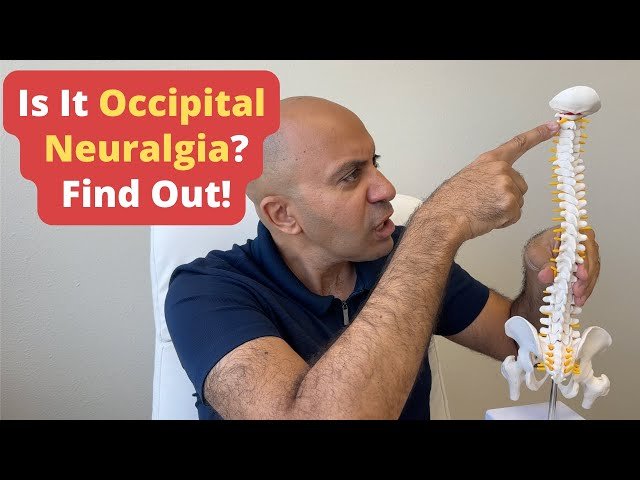
What is Occipital Neuralgia? How Is It Related To Fibromyalgia?
One of the worst things about fibromyalgia, besides the chronic pain and fatigue, has to be the way that people who suffer from fibromyalgia are at risk of so many other conditions like autoimmune diseases and especially, chronic headaches.
It’s estimated that up to forty percent of people with fibromyalgia suffer from migraines or some other form of a persistent headaches But like fibromyalgia, it’s hard to get to the bottom of what’s causing your headache and like fibromyalgia, migraines are often misdiagnosed. In fact, some people who suffer from persistent headaches aren’t actually suffering from migraines, but from a related condition called occipital neuralgia. So, what is occipital neuralgia? How is it related to fibromyalgia? And what can you do to treat it?
What Is Occipital Neuralgia?
Occipital neuralgia is a condition that causes chronic pain in the base of the skull. People often describe it as being like an electrical shock or even similar to being stabbed in the muscle. The pain usually radiates from the back of the head down the neck and up the sides of the head or behind the eye.
The root of the condition lies in the occipital nerves. These are nerves that run from the back of the neck and the spine up through the sides of the head to the scalp. But sometimes, injuries or inflammation of the muscles in the spine cause the tissue to start pressing on these nerves. This leads to a condition called neuralgia, where the nerves begin to send pain signals to the brain.
That produces the symptoms that are similar to migraines, which makes it difficult to diagnose the condition. Doctors can diagnose the condition by performing a physical exam, pressing their finger into the base of the skull to see if your pain gets worse. In addition, they can also give you something called a nerve block, which shuts off the interaction between the nerves, which can help prove that it’s neuralgia rather than migraines.
But there are many different conditions that can lead to neuropathy, which is why it might affect people with fibromyalgia more frequently than the general population.
How Is It Related To Fibromyalgia?
Fibromyalgia puts you at risk of a number of different conditions and some of them are also contributing factors to neuralgia. For instance, diabetes is a common complaint of people with fibromyalgia. And the nerve pain from diabetes can contribute significantly to the risk of developing occipital neuralgia.
In addition, we know that having fibromyalgia makes you more likely to develop autoimmune conditions. An autoimmune condition is one where the body’s immune system begins to attack the body’s own tissue. This results in painful inflammation all over the body. And a common autoimmune condition is something called arteritis. Arteritis causes inflammation in the walls of the blood vessels. This inflammation can put pressure on the occipital nerves and can be a root cause of neuralgia.
And fibromyalgia also seems to affect the nerves themselves. Fibromyalgia seems to trigger your nerves to send pain signals to the brain. And it could be that the same nerve connections can contribute to the symptoms of occipital neuralgia.
So, there are a lot of different possible reasons that fibromyalgia could contribute to the condition, but what you probably want to know if you suffer from it is what you can do to treat it.
How Can You Treat It?
There are a few things you can do to immediately provide some relief. The best thing to do is to get some rest. Moving your neck can make the pain worse. Instead, lay down and apply a warm compress to the back of the neck. And massaging the muscles of the neck can help, as can basic, over-the-counter pain medication.
Your doctor can also prescribe a number of medications that can help with the symptoms. Your doctor might prescribe muscle relaxants to help ease the overly-tight muscles that are pressing on the nerves. And they can also prescribe steroid shots that help reduce inflammation of the tissue.
In addition, the doctor can give you regular nerve block injections. These nerve blocks tend to wear off after a week or two, so you will probably need a number of treatments to help control the symptoms.
Combined with rest and warm compresses, these medications are usually enough to help resolve the worst symptoms of the condition.
So, do you suffer from neuralgia? Do you think it’s related to your fibromyalgia? Let us know in the comments.
Fibromyalgia Treated with Occipital Nerve Stimulation
The diagnosis, pathophysiology, and treatment of fibromyalgia were topics addressed by Jennifer Sweet, MD, Assistant Professor of Neurological Surgery, Case School of Medicine, University Hospitals Case Medical Center, Cleveland, Ohio, at the 83rd Annual Scientific Meeting of the American Association of Neurological Surgeons in Washington, DC. Particular attention was paid to neurosurgical techniques for treating fibromyalgia.
Definition, Epidemiology, and Predisposing Factors
Fibromyalgia is a clinical syndrome composed of chronic widespread pain and reduced pain thresholds, affecting up to 5% of the US adult population, with a significantly higher rate in females. The disorder involves a constellation of symptoms, including pain, psychological conditions such as depression, anxiety, and panic disorders, fatigue, and additional comorbidities. Predictors of fibromyalgia are obesity, limited physical activity, high workload, increased physical discomfort, and permanent local pain of over 6 years’ duration.
The Pain of Fibromyalgia
The pain of fibromyalgia is characterized by chronic pain for at least 3 months in several regions of the body; neck, upper, mid, or low back, ribs, and at least one site on each limb; peripheral sensitization; diffuse muscle tenderness; and peripheral and central sensitization. Patients also complain of fatigue, characterized by difficulty sleeping through the night, mental and physical exhaustion, and altered non rapid eye movement sleep. Comorbidities of the cardiovascular, peripheral and central nervous, urinary, and gastrointestinal systems are also involved.
Differential Diagnosis
Fibromyalgia must not be mistaken for hypothyroidism, tendonitis, ankylosing spondylitis, lupus erythematosus, dermatomyositis, polymyositis, rheumatoid arthritis, or osteoarthritis, or other similar types of disorders.
Pathophysiology
-
Peripheral and central sensitization: Fibromyalgia is characterized by an increased peripheral response to stimulation, increased excitability of dorsal horn neurons, wind-up (temporal summation), and temporal summation of second pain.
-
Neurotransmitter release: In fibromyalgia, norepinephrine, dopamine, and serotonin (leading to depression and panic disorder) are reduced. Substance P, glutamate, and opioids can be increased. Altered connectivity and cerebral blood flow, and even anatomical changes such as cortical thickness, have been demonstrated on various functional magnetic resonance imaging studies.
Treatment Strategies
Pharmacological treatments: Selective serotonin reuptake inhibitors, tricyclic antidepressants, gabapentin, pregabalin, opioids, ketamine, naltrexone, sodium oxybate, benzodiazepine, and hypnotics, or a combination.
-
Selective serotonin reuptake inhibitors raise serotonin levels, which are reduced in fibromyalgia. Tricyclic antidepressants and dual reuptake inhibitors of serotonin and noradrenaline, such as venlafaxine, raise noradrenaline, which is reduced in fibromyalgia.
-
Ketamine raises dopamine, which is reduced in fibromyalgia.
-
Naltrexone reduces opioids, which are raised in fibromyalgia.
-
Naltrexone reduces opioids, which are raised in fibromyalgia.
-
Gabapentin and pregabalin lower glutamate and substance P, which are raised in fibromyalgia.
-
Sodium oxypate, benzodiazepines, and hypnotics raise gamma-aminobutyric acid.
Nonsteroidal anti-inflammatory drugs and corticosteroids have not been proven to be as effective.
Non-pharmacological treatments: Physical medical rehabilitation and regular exercise, cognitive behavioral therapy, meditation and yoga, hyperthermia and hydrotherapy have all been shown to be beneficial in the treatment of fibromyalgia. Additional studies suggest repetitive transcranial magnetic stimulation, transcranial direct current stimulation, xenon radiation of the stellate ganglion, and surgical interventions can also play a role in the management of these patients.
Occipital nerve stimulation: Occipital nerve stimulation involves subcutaneous implantation of one or more electrodes over the sensory nerves of the second and third cervical segments of the spine, located over the occiput of the skull. The electrodes deliver electrical current to these superficial sensory nerves and are thought to influence pain processing and thus improve pain symptoms in patients with fibromyalgia. Stimulation is usually performed first as a short trial, during which an electrode is percutaneously placed with the use of fluoroscopy in an awake patient in a surgical suite. Over the course of several days, stimulation is delivered via an external battery source. If symptoms of fibromyalgia-related head and overall body pains improve, then surgery is
-
percutaneously placed with the use of fluoroscopy in an awake patient in a surgical suite. Over the course of several days, stimulation is delivered via an external battery source. If symptoms of fibromyalgia-related head and overall body pains improve, then surgery is scheduled to permanently implant the electrode and connect it to a battery source that is surgically implanted beneath the skin, similar to a pacemaker device.
Studies investigating the effect of occipital nerve stimulation for fibromyalgia have shown significant decreases in pain visual analog scale scores as well as improvement in functional capacity during stimulation and at follow-up. One study also demonstrated significant improvements in fatigue per the modified fatigue and impact scale, number of trigger points, and overall morbidity per the fibromyalgia compact questionnaire. No serious adverse events were reported in these studies.