Morton’s Neuroma and Fibromyalgia. Are they Both Related ?
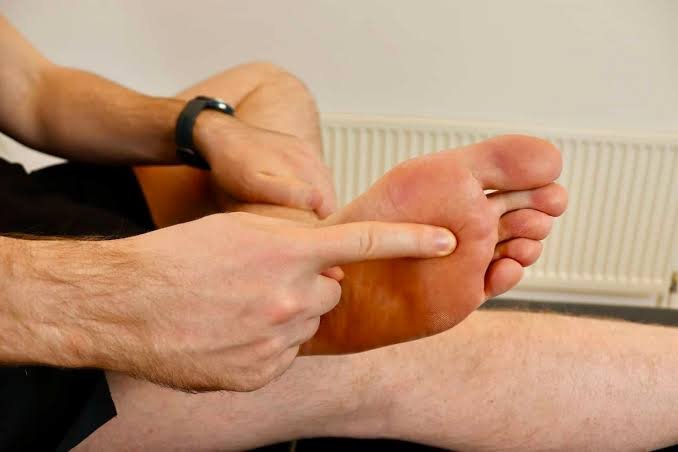
Condition in which the ball of the foot (the area between third and fourth toe) involves in severe pain, is known as Morton’s Neuroma. It gives the feeling that a person is standing on a pebble, the pointed pain in the particular point is because of thickening of the tissues around on a nerve of that particular area, which leads to your foot. Because of such burning and sharp pain in the ball of the foot may also cause your toes to burn, sting or feel numb.
One of the reasons for the development of Morton’s Neuroma is wearing high heels. It can be relieved by switching to lower heeled or wider toe shoes. If not, then surgery or sometimes injections are required like corticosteroid.
The reasons for Morton’s Neuroma and its link to fibromyalgia is unknown until now. There are different treatments and precautions to deal with Morton’s Neuroma and fibromyalgia, but a permanent cure for both is still unidentified.
As fibromyalgia cause pain and affect different muscles and joints of the body, the targeted areas are mostly soft tissues or tenders which are present in the whole body. As a result, the daily tasks of a day also get tremendously painful to do. Day by day the sufferer gets unable to fulfill one’s tasks. Morton’s Neuroma, if the cause in fibromyalgia makes difficult for the person to move around and walk. Which indeed lazy down the person from getting propagate causing isolation and depression.
How Morton’s neuroma relates to fibromyalgia
Many orthopedics researched and conclude the connection between the two. But the reason is still unknown. It is observed that while treating Morton’s neuroma, the symptoms of fibromyalgia decreased or even cleared up. This achievement leads the researches to believe that the nerve damage or injury could be the causes of pain in fibromyalgia.
States of Morton Neuroma
Like fibromyalgia, a big ratio of sufferers are women than that of men. Research shows that out of ten of effected persons, 8 are women. Following are few conditions due to which Morton’s neuroma develops in a person:
- Diabetes
- Arthritis
- HIV
- sleep disorder
Symptoms of Morton’s Neuroma
The Morton’s neuroma will be worse by wearing high heeled shoes or by some disturbing physical activities. Some of the symptoms are as follows:
- Numbness in the toes
- Burning pain in second and third toe
- Balls of foot got a sharp pain
- Formation of lump or feeling of a lump between toes
- The feeling of high pressure on feet
- Radiating pain from the foot towards toes
Difficulty in moving and walking
Origins of Morton’s Neuroma
The exact reason for Morton’s neuroma is still unknown according to the researchers. Like fibromyalgia, in Morton’s neuroma also have different factors to cause the development of such pains which is not limited to such condition. The factors of possible prime development of fibromyalgia and Morton’s neuroma are as follows:
Wearing tight shoes
The uncomfortable shoes cause pressure on the feet. The causes include inflammation around the nerves in the feet. Wearing high heels cause the pressure of the whole body on toes, which may cause a high possibility in contributing to the reasons for Morton’s neuroma and fibromyalgia.
Tedious actions
The practice of tedious activates due to which there is high pressure on feet cause, can become a reason for Morton’s neuroma. The activities may include aerobics, walking and jogging.
Injuries
If the feet got injured due to any reason and are unable to hold the body in proper posture, causing the unnatural position while walking may also lead to inflammation in nerves. the instability causes the formation of lumps.
Genetic problem
Few people have inborn unwell shaped feet. Feet with low arches, called flat feet, are more likely to be the target of development of Morton’s neuroma.
Effects of Morton’s Neuroma
Most people still do not know about Morton’s Neuroma. The condition affects the toes and feet of a person. If a person is diagnosed that he has Morton’s Neuroma that means the nerves are surrounded by some extra tissues around it which will affect tie toes and feet. The growth of some extra tissues around the nerves causes inflammation and pain when feet are involved in some activity.
This condition is a form of Benign tumor, usually formulated between the third and fourth toe of the foot. It can also be developed between the second and third toe. When this ligament toes the bones of the feet and pressed down to the surface, by walking or in standing, the pressure put on the feet in such condition caused severe pain. When Morton’s neuroma combines with fibromyalgia, the condition and pain got only worse.
Treatment
The basic way to treat the condition is to change a few things from one’s lifestyle, like in fibromyalgia. Few simple relieves includes:
- Getting a comfortable shoe
- Avoiding extra activity
- Maintaining weight
- Using proper orthopedic methods