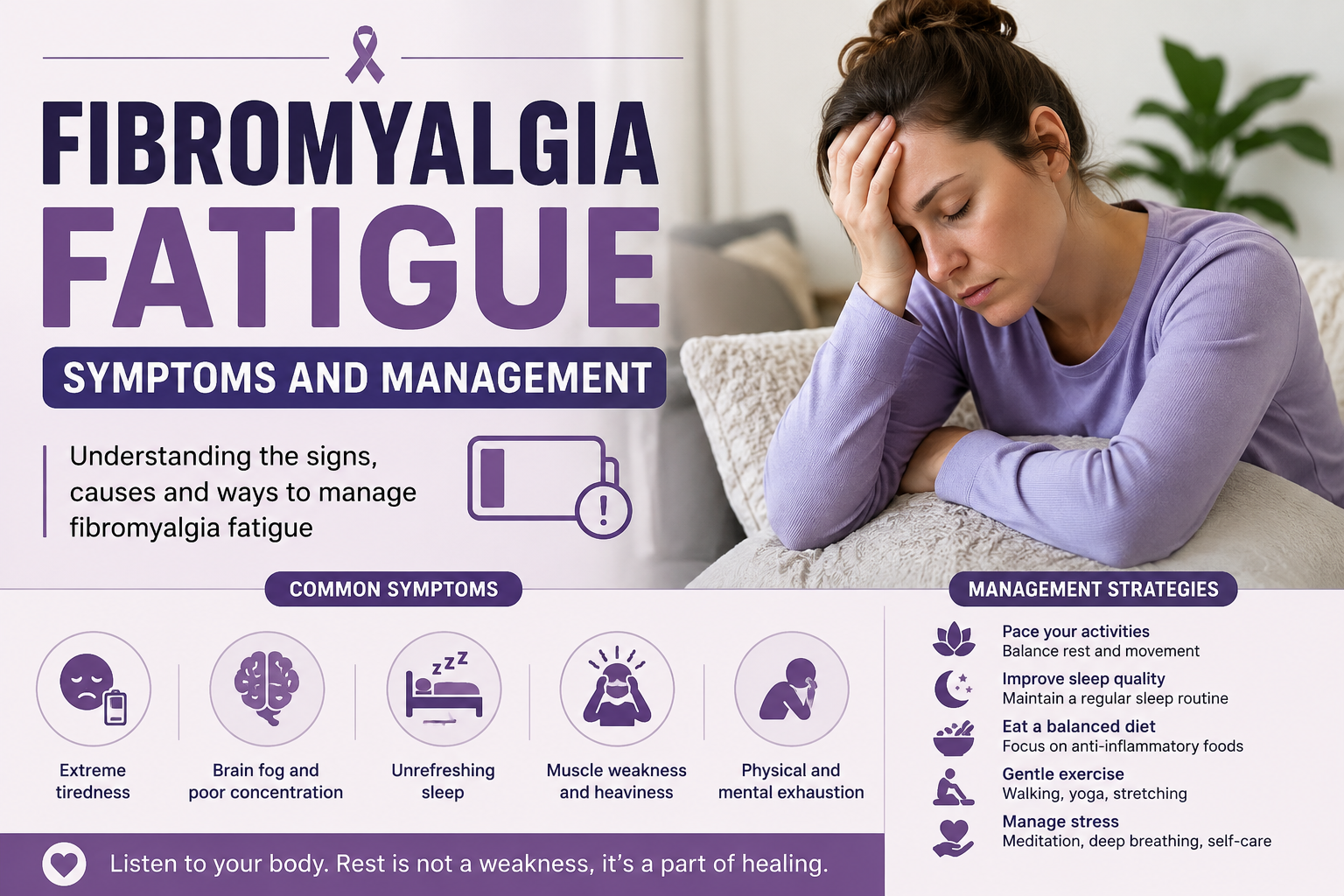
Fibromyalgia Fatigue Symptoms: Causes, Triggers, and Proven Management Strategies
If you’ve ever described your tiredness as feeling like you’re “moving through wet cement” or waking up more exhausted than when you went to bed — and you live with fibromyalgia — you already know that fibromyalgia fatigue is a different animal entirely. It’s not just being sleepy. It’s a heavy, relentless exhaustion that no amount of rest seems to fix.
Fibromyalgia affects an estimated 4 million adults in the United States alone, and fatigue is consistently ranked among its most disabling symptoms — sometimes even more disruptive than the widespread pain the condition is known for. Understanding why this fatigue happens, what makes it worse, and what genuinely helps is the first step toward reclaiming your energy and your life.
This guide covers everything you need to know, from the science behind the exhaustion to practical, day-to-day strategies backed by current research.
Table of Contents
- What Is Fibromyalgia Fatigue — And Why Is It So Different?
- Common Fibromyalgia Fatigue Symptoms to Watch For
- What Triggers and Worsens Fibromyalgia Fatigue?
- The Connection Between Sleep Disorders and Fibromyalgia Fatigue
- Evidence-Based Fibromyalgia Fatigue Management Strategies
- When to Talk to Your Doctor About Fatigue
- Frequently Asked Questions
- Conclusion
What Is Fibromyalgia Fatigue — And Why Is It So Different? {#what-is-fibromyalgia-fatigue}
More Than Just Being Tired
Normal tiredness has a straightforward cause — you stayed up too late, worked a long shift, or ran a 5K. You sleep, and you feel better. Fibromyalgia fatigue doesn’t follow those rules.
Researchers now believe fibromyalgia involves a dysfunction in how the central nervous system processes pain and sensory signals — a phenomenon called central sensitization. This means the brain and spinal cord are stuck in a state of heightened alert, amplifying not just pain but also fatigue signals. Your body is, in a very real neurological sense, working overtime even when you’re doing nothing.
A 2020 study published in Arthritis Research & Therapy found that fibromyalgia patients show abnormal patterns of neurological activity that directly contribute to both pain hypersensitivity and persistent fatigue. This isn’t a matter of effort or willpower — it’s a measurable physiological process.
How Fibromyalgia Fatigue Feels
People with fibromyalgia often describe their fatigue as:
- Cognitive and physical at the same time — you’re mentally foggy and physically drained simultaneously
- Disproportionate to activity — minor tasks like grocery shopping or a short walk can trigger hours or days of worsened exhaustion
- Unrefreshing despite sleep — eight hours in bed can feel like two
- Unpredictable — some days are functional; others are not, with no obvious reason for the difference
This unpredictability is one of the most frustrating aspects. It makes planning, working, and maintaining relationships genuinely difficult.
Common Fibromyalgia Fatigue Symptoms to Watch For {#common-symptoms}
Physical Fatigue Symptoms
Fibromyalgia-related fatigue shows up in the body in very specific ways. Recognizing them can help you distinguish fibromyalgia exhaustion from other potential causes and communicate more effectively with your healthcare provider.
Common physical symptoms include:
- Muscle weakness or heaviness — limbs that feel weighted down even without exertion
- Post-exertional malaise (PEM) — a significant worsening of fatigue and pain following physical or mental activity, sometimes delayed by 12–48 hours
- Morning stiffness — joints and muscles that feel locked or rigid for an hour or more after waking
- Flu-like exhaustion — a systemic, whole-body tiredness that mimics having a low-grade illness
- Reduced stamina — activities that were once easy now require significant recovery time
Cognitive Fatigue Symptoms (Fibro Fog)
“Fibro fog” is the widely used term for the cognitive symptoms that accompany fibromyalgia fatigue. It’s not a separate condition — it’s part of the same neurological picture.
Symptoms of fibro fog include:
- Difficulty concentrating or staying focused
- Short-term memory lapses (forgetting words mid-sentence, misplacing items frequently)
- Slowed thinking and processing speed
- Trouble multitasking
- Feeling mentally “blank” or detached
For many people, fibro fog is more professionally and socially disabling than the physical fatigue itself. A nurse who can’t remember medication protocols, a teacher who loses her train of thought mid-lesson — these are real consequences that deserve serious attention.
Emotional and Mood-Related Fatigue
Chronic fatigue takes a psychological toll. People with fibromyalgia have significantly higher rates of depression and anxiety, and both conditions amplify the perception of fatigue in a bidirectional relationship — fatigue worsens mood, and poor mood worsens fatigue.
Watch for:
- Emotional exhaustion or feeling overwhelmed by small tasks
- Increased irritability, especially on high-fatigue days
- Social withdrawal due to lack of energy
- Feelings of hopelessness about ever feeling better
What Triggers and Worsens Fibromyalgia Fatigue? {#triggers}
Identifying Your Personal Flare Triggers
Not all fibromyalgia fatigue is equal. Many people notice that certain situations reliably make their exhaustion worse. Common triggers include:
Physical triggers:
- Overexertion (doing too much on a good day)
- Cold or damp weather
- Illness or infection
- Hormonal fluctuations (particularly around menstruation)
- Changes in physical routine
Mental and emotional triggers:
- Chronic stress or a major life stressor
- Anxiety or panic episodes
- Conflict in relationships
- Work-related pressure or deadlines
Environmental and lifestyle triggers:
- Poor sleep quality or disrupted sleep schedule
- Dietary choices (some people report sensitivity to gluten, sugar, or caffeine)
- Dehydration
- Sedentary behavior (paradoxically, too little movement worsens fatigue over time)
Keeping a daily fatigue journal — rating your energy from 1–10, noting sleep quality, activity level, stress, and diet — can reveal patterns you might not otherwise notice. After two to four weeks, many people identify two or three consistent triggers they can actually address.
The Connection Between Sleep Disorders and Fibromyalgia Fatigue {#sleep-connection}
Why People with Fibromyalgia Rarely Sleep Well
Sleep and fibromyalgia have a deeply complicated relationship. Research consistently shows that most people with fibromyalgia experience non-restorative sleep — they cycle through the stages of sleep, but they don’t spend enough time in the deep, slow-wave stages where physical repair and memory consolidation occur.
Studies using polysomnography (sleep studies) have found that fibromyalgia patients show an unusual pattern called alpha wave intrusion during deep sleep — essentially, their brains keep partially “waking up” throughout the night without them realizing it. The result is that mornings feel like they never really slept at all.
Complicating matters further, several sleep disorders occur at higher rates in fibromyalgia patients:
- Restless legs syndrome (RLS) — an uncomfortable urge to move the legs at night
- Sleep apnea — interrupted breathing during sleep that fragments sleep architecture
- Periodic limb movement disorder (PLMD) — involuntary leg movements during sleep
If you haven’t been evaluated for these conditions, it’s worth discussing with your doctor. Treating an underlying sleep disorder can meaningfully reduce fibromyalgia fatigue even when other symptoms remain the same.
Sleep Hygiene Strategies That Actually Help
Before turning to medication, improving sleep hygiene is foundational:
- Set a consistent sleep and wake time — even on weekends. Irregular schedules disrupt your circadian rhythm.
- Cool your bedroom — the ideal sleep temperature is between 60–67°F (15–19°C).
- Eliminate screens one hour before bed — blue light suppresses melatonin production.
- Limit caffeine after noon — caffeine has a half-life of about five to six hours.
- Use your bed only for sleep — working or watching TV in bed trains your brain to associate the space with wakefulness.
- Try progressive muscle relaxation — systematically tensing and releasing muscle groups before bed can reduce the physical tension that disrupts fibromyalgia sleep.
Evidence-Based Fibromyalgia Fatigue Management Strategies {#management-strategies}
Exercise: The Counter-Intuitive Solution
It sounds backward — you’re exhausted, and someone’s telling you to exercise. But the evidence here is genuinely strong.
A 2017 Cochrane Review, one of the most comprehensive analyses of fibromyalgia treatment research, concluded that aerobic exercise produces moderate improvements in pain, fatigue, and overall quality of life for fibromyalgia patients. The key is starting very low and progressing very slowly — an approach known as graded exercise therapy.
What works:
- Water aerobics or pool walking — the buoyancy reduces joint stress while still providing cardiovascular benefit
- Gentle yoga or tai chi — both combine movement with mindfulness, addressing physical and mental fatigue simultaneously
- Walking — starting with as little as five to ten minutes per day and adding one to two minutes per week
- Cycling on a recumbent bike — supports the body while building cardiovascular capacity
What to avoid: High-intensity interval training, heavy resistance training, or any program that pushes you to your limits. Pushing too hard causes post-exertional malaise and sets back recovery.
Cognitive Behavioral Therapy (CBT) for Fatigue Management
CBT is not about convincing yourself the fatigue isn’t real. It’s about changing the thought patterns and behaviors that inadvertently make fatigue worse — like the “push-crash” cycle, where people overdo it on good days and collapse for days afterward.
Research published in Pain (journal) found that CBT specifically targeting fatigue in fibromyalgia patients led to significant and lasting reductions in fatigue severity compared to standard care alone. CBT helps patients:
- Recognize and interrupt the push-crash cycle
- Set realistic activity goals using pacing strategies
- Challenge unhelpful beliefs about fatigue (such as “rest is always best”)
- Develop coping strategies for low-energy days
Pacing: Your Most Underrated Tool
Pacing is the practice of balancing activity and rest before you reach the point of exhaustion — rather than after. Think of your daily energy as a battery with a smaller-than-normal capacity.
The basic principle: stop before you’re tired, rest before you need to.
Practical pacing strategies include:
- Breaking tasks into smaller segments with planned rest breaks
- Using a timer to limit continuous activity (start with 20–30 minutes on, 10 minutes off)
- Prioritizing tasks by importance and delegating or deferring low-priority activities
- Saving your highest-energy activities for your peak energy window (often mid-morning for many fibromyalgia patients)
Medication Options for Fatigue
While no medication is specifically approved for fibromyalgia fatigue, several drugs approved for fibromyalgia can help:
- Duloxetine (Cymbalta) and milnacipran (Savella) are SNRIs that address pain, fatigue, and mood simultaneously
- Pregabalin (Lyrica) and gabapentin can improve sleep quality, indirectly reducing fatigue
- Low-dose naltrexone (LDN) is an off-label option showing promising early results for both pain and fatigue in small studies
- Low-dose tricyclic antidepressants like amitriptyline are sometimes used at bedtime to improve sleep depth
Always discuss medication options with a rheumatologist or pain specialist familiar with fibromyalgia — general practitioners sometimes undertreated the condition due to limited familiarity with current guidelines.
Diet and Nutritional Support
No diet cures fibromyalgia, but certain nutritional strategies can reduce inflammation and support energy:
- Anti-inflammatory eating — emphasizing colorful vegetables, fatty fish, olive oil, and whole grains while limiting processed foods and refined sugar
- Adequate protein — supports muscle function and reduces the physical feelings of weakness
- Magnesium — some research suggests fibromyalgia patients have lower magnesium levels; supplementation (250–400 mg daily) may support muscle function and sleep
- Vitamin D — deficiency is common and independently associated with fatigue; ask your doctor to test your levels
- Staying hydrated — even mild dehydration worsens fatigue and cognitive function
When to Talk to Your Doctor About Fatigue {#talk-to-doctor}
Red Flags That Warrant Prompt Evaluation
While fatigue is a core fibromyalgia symptom, some changes in fatigue patterns warrant medical attention to rule out other causes:
- Sudden, severe worsening of fatigue not explained by a trigger
- New fatigue accompanied by fever, swollen lymph nodes, or unexplained weight loss
- Fatigue that improves dramatically with rest (which is less typical of fibromyalgia)
- New cognitive symptoms beyond baseline fibro fog
Conditions like thyroid disorders, anemia, lupus, and sleep apnea can all overlap with or worsen fibromyalgia — and are treatable. Regular bloodwork and honest communication with your care team about changes in your symptoms is essential.
Frequently Asked Questions {#faq}
Q: Is fibromyalgia fatigue the same as chronic fatigue syndrome?
A: They’re related but distinct. Fibromyalgia and chronic fatigue syndrome (myalgic encephalomyelitis/CFS) share overlapping symptoms, including non-restorative sleep and post-exertional malaise. However, fibromyalgia is primarily characterized by widespread pain with fatigue as a secondary symptom, while ME/CFS is defined by fatigue as the central feature. Some people are diagnosed with both. The management approaches have significant overlap.
Q: Can fibromyalgia fatigue come and go, or is it always present?
A: Most people experience fluctuating levels of fatigue rather than a constant plateau. “Good days” and “bad days” — or even “good hours” — are common. Flares triggered by stress, illness, or overexertion can dramatically worsen fatigue for days to weeks before returning to baseline. Tracking patterns can help you anticipate and plan for these fluctuations.
Q: Does fibromyalgia fatigue get worse with age?
A: Not necessarily, and this is actually encouraging. Long-term studies suggest that fibromyalgia symptoms — including fatigue — don’t inevitably worsen over time. With appropriate management, many people see improvement or stabilization. However, untreated sleep disorders, declining physical fitness, or worsening comorbid conditions (like depression or obesity) can contribute to worsening fatigue independently.
Q: What is the best diet for fibromyalgia fatigue?
A: There’s no single “fibromyalgia diet” with strong clinical proof, but an anti-inflammatory diet pattern — similar to a Mediterranean-style diet — is the most consistently supported by research. Some patients report improvement by eliminating gluten or reducing sugar, though this varies individually. A registered dietitian with experience in chronic conditions can help you develop a sustainable approach.
Q: How do I explain fibromyalgia fatigue to people who don’t understand it?
A: The “spoon theory” is a widely used metaphor in the chronic illness community — each day starts with a limited number of “spoons” (units of energy), and every task costs spoons. Once they’re gone, they’re gone. Sharing this framework with family members or employers can help them understand why you can’t simply “push through.” Books and reputable patient resources from organizations like the National Fibromyalgia Association can also help loved ones develop genuine understanding.
Q: Are there any supplements that help with fibromyalgia fatigue?
A: The evidence base is modest but some supplements have shown potential: magnesium glycinate for sleep and muscle function, vitamin D (if deficient), and CoQ10 for cellular energy production. Always discuss supplements with your doctor before starting them, as some interact with medications.
Conclusion {#conclusion}
Living with fibromyalgia fatigue symptoms is genuinely hard — not just because of the exhaustion itself, but because it’s often invisible to others and misunderstood even within the medical system. The good news is that the science of fibromyalgia has advanced considerably, and there are real, evidence-based strategies that can make a meaningful difference.
Managing fibromyalgia fatigue isn’t about finding a cure. It’s about building a toolkit — pacing strategies, better sleep habits, gentle exercise, appropriate medical support, and honest self-knowledge about your triggers — that helps you live more fully within your current reality while continuing to work toward improvement.
You deserve care that takes your fatigue seriously. Start with one strategy from this guide, give it time, and build from there.