I Am So Sick of Being Sick With Fibromyalgia
Being sick when you have fibro is worse than anything
I’m dealing with some sort of upper respiratory infection that started yesterday when I woke up with a painfully sore throat. I’ve had the flu, strep, and my period all at once before and that was terrible, I’ve also had mono, and covid (which was definitely worse than this in terms of fatigue). This shit has my body protesting any sort of movement.
If the sore throat wasn’t bad enough. My entire body hurts, but my joints the muscles around them are worst. My body wants to sleep, and not move. Everyone is being loud and I can’t handle it.
Thankfully it’s my day off, and thankfully my pharmacist and doctor were able to sort out my gabapentin issue (ins wouldn’t cover the ER formulation + I had to swap pharmacies = was out for ~5 weeks).
Not so thankful over also having my period start today on top of all of it (due to same issue as gaba I didn’t get my birth control in time). But I’m grateful for my heating pad, rice sock, migraine sleep mask, and heated blankie. Also grateful for zzzquil, UberEats, generic sinus medicine, and mucinex insta soothe sore throat drops.
Would love if some place near by had any mint chocolate chip ice cream in stock though.
Edit: took mucinex last night and this morning and had the humidifier going all night with some Vicks in it, plus loads of fluids. So I’m feeling human enough to do some things around the house (laundry, cleaning the bathroom, and changing out the toilet seat cause someone broke yet another one) I am taking intermittent breaks and still loading up on fluids (and naproxen and my gabapentin).
Thank you for all the get better wishes! And for those of you that are sick, I am hoping you feel better soon.
Fibromyalgia
Fibromyalgia is a long-term condition that causes widespread muscle pain, fatigue and brain fog. It happens when your nervous system becomes more sensitive to pain signals. There isn’t a cure. But lifestyle changes, therapy and medication may help you manage flare-ups and improve daily life.
What Is Fibromyalgia?
Fibromyalgia is a long-term condition that causes widespread musculoskeletal pain, ongoing fatigue and sleep problems. You may also have memory or focus issues, often called “fibro fog.”
Research shows it involves changes in how your central nervous system processes pain. This system becomes more sensitive and amplifies pain signals. This means your body feels pain more strongly.
Symptoms often come and go in periods called flare-ups. There isn’t a cure, but treatment could help manage symptoms.
Symptoms and Causes
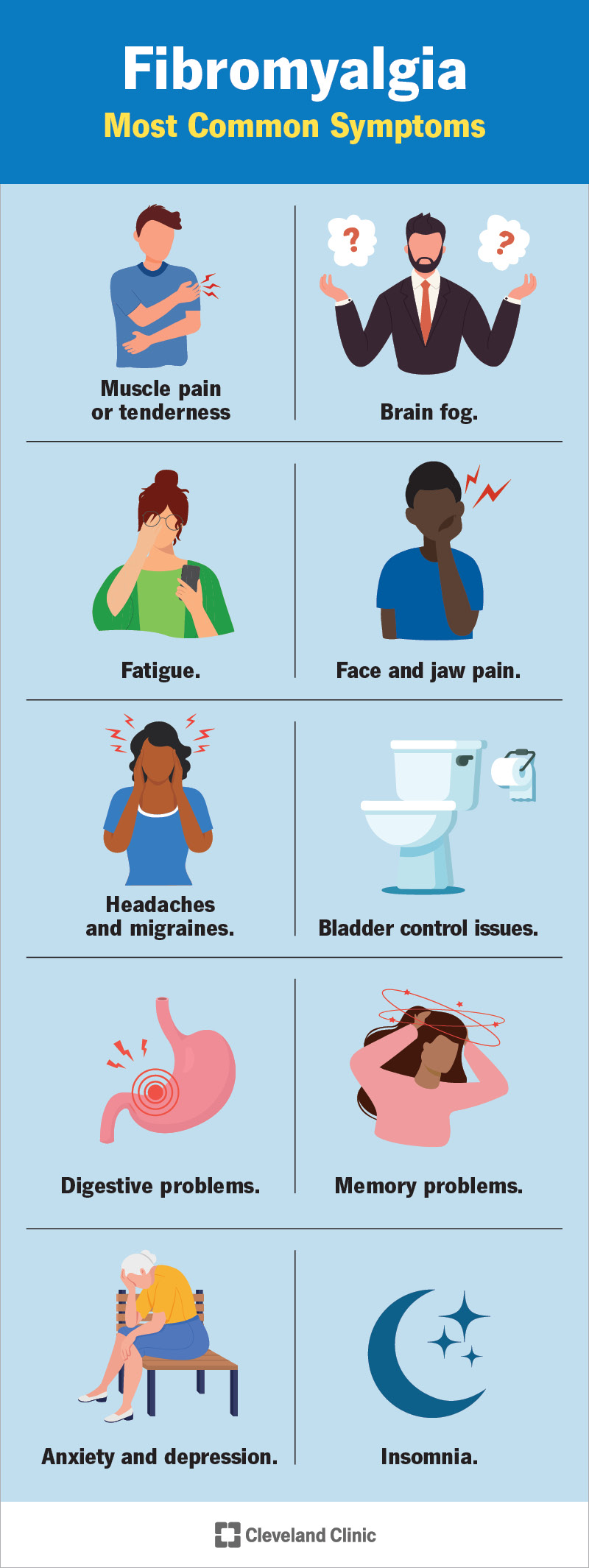
Fibromyalgia symptoms
Symptoms may feel worse during a flare-up. A flare-up is a period when your symptoms suddenly get stronger or harder to manage. At other times, symptoms may feel milder and easier to handle. Common symptoms include:
- Muscle pain or tenderness
- Face and jaw pain
- Fatigue
- Headaches and migraines
- Digestive problems, like diarrhea and constipation
- Urinary urgency or frequency
Fibromyalgia can cause mental and emotional symptoms, including:
- Memory problems (“fibro fog” or “brain fog”)
- Anxiety
- Depression
- Insomnia and other sleep disorders
What does fibromyalgia feel like?
People commonly describe widespread fibromyalgia pain as:
- Aching
- Burning
- Throbbing
- Hurting all over
Fatigue and sleep problems can make daily life harder. You may have unrestful sleep. This means you wake up feeling tired even after sleeping all night. You might also have trouble falling asleep, staying asleep or waking up refreshed. This can make your day feel long and draining.
Many people also describe feeling “fibro fog” or “brain fog.” This is when you have trouble concentrating, remembering things or thinking clearly.
What causes fibromyalgia?
Experts haven’t found one single cause of fibromyalgia. Many researchers think fibromyalgia affects how your brain and spinal cord (central nervous system) process pain. Your central nervous system becomes more sensitive. This is called central sensitization. It means your body amplifies pain signals, so you feel pain more strongly than expected.
Because experts don’t know the exact cause, there’s no known way to prevent it.
What triggers a fibromyalgia flare-up?
In general, anything that increases stress on your body or mind could trigger a flare-up. Common triggers include:
- Emotional stress
- Changes in your daily routine
- Not getting enough sleep or changing your sleep schedule
- Weather or temperature changes
- Illness or injury
- Starting a new medication or changing your usual treatment plan
Triggers vary from person to person. Something that causes symptoms for someone else may not affect you the same way. Learning your personal triggers may help you plan ahead and manage symptoms more effectively.
Is fibromyalgia hereditary?
Fibromyalgia can run in biological families. This suggests a genetic link. If you have a close family member who has this condition, you have a higher risk of developing it. Researchers continue to study specific genes that may increase risk.
Risk factors
Anyone can develop this condition. You may have an increased risk of developing it if you:
- Are female
- Are an adult
- Have a family history of fibromyalgia
- Have a mood disorder or significant stress
- Have other chronic pain disorders
Children can get fibromyalgia, too, but it’s less common than in adults.
Complications of fibromyalgia
Fibromyalgia could lead to other health and life challenges over time. These may include:
- Decreased daily functioning (affecting your ability to walk, work and do your usual activities)
- Higher risk of depression
If you’re struggling physically or emotionally, talk with your healthcare provider. Support and treatment are available.
Diagnosis and Tests
How is fibromyalgia diagnosed?
A healthcare provider diagnoses fibromyalgia based on your symptoms, medical history and a physical exam. During the exam, they’ll check for tenderness in different areas of your body.
Your provider may order basic blood tests to rule out other conditions, like thyroid disease or inflammatory arthritis. Lab tests help rule out other causes.
There isn’t a single blood test or scan that confirms fibromyalgia. The blood tests that you may see advertised for this condition aren’t accurate enough for most people. For that reason, insurance often doesn’t cover them.
Fibromyalgia diagnostic criteria
Many healthcare providers use the American College of Rheumatology diagnostic criteria to make a diagnosis. You must have:
- Widespread pain in at least four out of five body regions
- Symptoms that last at least three months
- No other condition that fully explains the pain
Your provider may also use symptom scoring tools. These measure:
- How many areas of your body hurt (Widespread Pain Index or WPI)
- How severe your fatigue, sleep problems and thinking difficulties are (symptom severity score or SS)
Management and Treatment
Fibromyalgia treatments
There are different treatment options available to manage symptoms. You may need to try a combination of lifestyle changes, medications and therapies to find what works best.
Your healthcare provider might recommend the following as a first line of treatment:
- Regular low-impact exercise, like walking, swimming, biking or yoga
- Good sleep habits, like keeping a regular bedtime and limiting screen time before bed
- Stress reduction techniques, like mindfulness, relaxation exercises or meditation
Fibromyalgia medication
If symptoms are moderate to severe, your provider may recommend medication, including:
- SNRIs: These may help with pain and mood.
- Tricyclic antidepressants: These may improve sleep and manage pain.
- Antiseizure medications: These may reduce nerve-related pain.
- Central-acting analgesics: These may block pain signals in your brain and spinal cord.
Fibromyalgia therapies
Several therapies may help manage this condition alongside other treatment options. Your provider may recommend:
- Mental health support: This helps you manage pain, stress and negative thought patterns. Cognitive behavioral therapy is an example of such support.
- Physical therapy: Gentle stretching and strengthening exercises may improve movement, reduce pain and build stamina.
- Sleep programs: These focus on improving your sleep habits and routines.
- Complementary therapies: These may relax muscles, reduce pain signals and improve overall comfort. Examples of therapies include acupuncture, massage therapy, hypnosis, biofeedback, heat therapy and TENS.
Your provider can help you decide which therapies may work best for you.
How to calm a fibromyalgia flare-up
When a flare-up happens, focus on small, steady steps. The goal is to calm symptoms without stopping all activity. Try to:
- Pace your activity: Avoid overdoing it, but don’t stay in bed all day. Try gentle stretching or light movement and slowly return to your routine.
- Protect your sleep: Keep your room dark and quiet at bedtime. Avoid screens or caffeine before bed.
- Lower stress: Practice deep breathing, meditation, mindfulness or other relaxation techniques.
- Use supportive therapies: Heat therapy, gentle massage or stretching may help.
- Stay consistent with treatment: Take medications as prescribed. Contact your provider if symptoms don’t improve.
What are the four stages of treating fibromyalgia?
Sometimes, healthcare providers talk about treatment in “stages.” These aren’t strict steps. They’re general areas of care that help manage symptoms. This condition doesn’t follow a set pattern. Symptoms don’t happen in a certain order, and everyone’s experience is different.
The four main parts of treatment include:
- Non-medication treatments: Stretching and exercise can help loosen and strengthen muscles and joints.
- Mental health support: Therapy can help you cope with stress and protect your emotional well-being.
- Medications: Medicines can help manage pain, sleep problems or mood symptoms.
- Daily functioning support: A therapist can help you adjust your routine if symptoms make daily tasks harder.
Your provider will tailor treatment to how you feel, your physical function and what you need at different times.