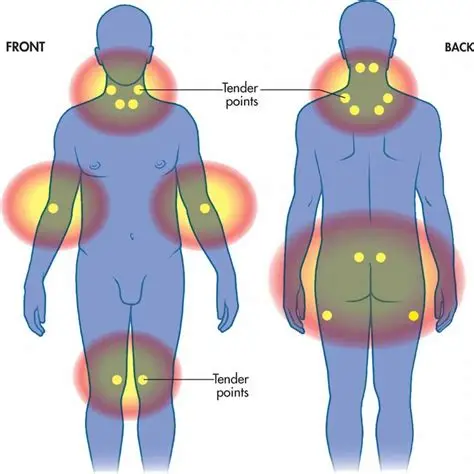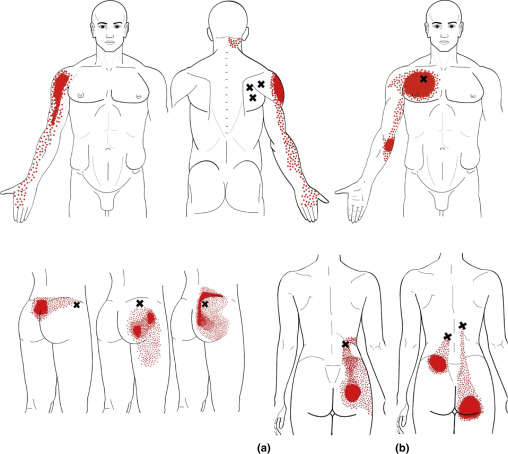
Yes—many people with Fibromyalgia report pain in the shoulder blade area (also called the scapular region), and it can affect one side or both. Below is a detailed, line-by-line explanation to help you understand what’s going on and how common this is:
Yes, shoulder blade pain is very common in fibromyalgia.
It can occur on one side or both sides.
Many patients describe it as deep, aching pain.
Some feel it as burning or stabbing.
The area between the shoulder blades is especially sensitive.
This region has multiple tender points.
Fibromyalgia affects pain processing in the brain.
So even mild tension can feel severe.
Muscles around the scapula often stay tight.
Chronic tension leads to soreness.
Poor posture can worsen the pain.
Sitting long hours increases strain.
Stress also contributes significantly.
Emotional stress tightens upper back muscles.
Sleep disturbances make pain worse.
Fibro patients often don’t get deep sleep.
That prevents muscle recovery.
Pain can spread from neck to shoulder blades.
It may also radiate to arms.
Some feel knots in that area.
These are called trigger points.
Trigger points are very common in fibro.
Pressing them can cause referred pain.
Pain may travel across the upper back.
Some people feel stiffness more than pain.
Others feel both stiffness and pain.
Weather changes can increase discomfort.
Cold weather often worsens symptoms.
Fatigue makes the pain feel stronger.
Overexertion can trigger flare-ups.
Even light activity may cause soreness.
Carrying bags can worsen shoulder pain.
Sleeping position matters a lot.
Wrong pillow height can strain muscles.
Side sleeping may stress one shoulder blade.
Back sleeping may relieve pressure.
Some feel clicking or tension while moving.
Movement can feel restricted.
Stretching may feel painful but helpful.
Gentle stretching is usually recommended.
Heat therapy often provides relief.
Warm showers can relax muscles.
Heating pads are commonly used.
Massage may help reduce tightness.
But deep massage can sometimes hurt.
Light massage is usually better.
Physical therapy can improve mobility.
Strengthening exercises may help long-term.
Overdoing exercise can worsen symptoms.
Balance is very important.
Many people report daily shoulder blade pain.
Others experience it during flare-ups only.
Pain intensity varies widely.
Some days are manageable.
Some days are very painful.
Anxiety can increase pain perception.
Relaxation techniques can help.
Breathing exercises reduce muscle tension.
Yoga is helpful for some patients.
Gentle yoga is recommended.
Heavy workouts are usually not advised.
Medications may reduce pain signals.
Doctors may prescribe pain modulators.
Not all medications work for everyone.
Trial and error is common.
Hydration may affect muscle function.
Drinking enough water helps.
Nutritional deficiencies can worsen pain.
Magnesium deficiency is sometimes linked.
Supplements may help some people.
Always consult a doctor before supplements.
Fibromyalgia symptoms vary person to person.
Shoulder blade pain is just one symptom.
Widespread body pain is the hallmark.
Tenderness is a key feature.
Fatigue is often severe.
Brain fog can occur too.
This makes daily tasks harder.
Pain may feel worse in the morning.
Stiffness is common after waking up.
Gentle movement helps loosen muscles.
Some feel relief after activity.
Others feel worse after activity.
Individual patterns differ.
Keeping a symptom diary may help.
This helps identify triggers.
Avoiding triggers can reduce flare-ups.
Common triggers include stress and lack of sleep.
Poor ergonomics also plays a role.
Workstation setup matters.
Proper chair support is important.
Screen height should be adjusted.
Frequent breaks reduce strain.
Stretching every hour helps.
Shoulder rolls can ease tension.
Neck stretches are useful too.
Foam rolling may provide relief.
Gentle pressure is recommended.
Avoid aggressive techniques.
Pain is real and valid.
It is not “just in your head.”
Fibromyalgia is a recognized condition.
Support from others is important.
Many people share similar experiences.
Online communities can be helpful.
Sharing experiences reduces isolation.
You are not alone in this.
Shoulder blade pain is widely reported.
Both sides can be affected equally.
Or one side may be worse.
Dominant hand use can influence pain.
Repetitive motions increase strain.
Lifting objects may trigger pain.
Driving long distances can worsen symptoms.
Carrying stress in shoulders is common.
Relaxation techniques are key.
Mindfulness can help manage pain.
Cognitive therapy may be beneficial.
Pain management is multi-dimensional.
No single solution works for all.
Combination approaches are best.
Lifestyle changes play a big role.
Small changes can make a difference.
Consistency is important.
Recovery is gradual, not instant.
Flare-ups are part of the condition.
Learning patterns helps control them.
Rest is important during flare-ups.
But complete inactivity is not advised.
Gentle movement is better.
Balance between rest and activity is key.
Emotional support improves coping.
Talking to others helps mentally.
Chronic pain can be exhausting.
Mental health matters too.
Depression can coexist with fibromyalgia.
Treating both improves quality of life.
Shoulder blade pain can be persistent.
But it can be managed.
Understanding your body is crucial.
Listening to pain signals helps.
Avoid pushing beyond limits.
Gradual progress is safer.
Celebrate small improvements.
Track what helps you.
Avoid what worsens pain.
Everyone’s fibro journey is unique.
There is no one-size-fits-all solution.
Patience is essential.
Self-care should be prioritized.
Pain does not define you.
You can still live a meaningful life.
Managing symptoms improves daily functioning.
Shoulder blade pain is part of the condition.
But it is manageable with care.
Medical guidance is important.
Always consult your doctor for severe pain.
Rule out other conditions if needed.
Not all shoulder pain is fibro.
Proper diagnosis is key.
Imaging may be needed sometimes.
Muscle strain can coexist.
Postural issues are common.
Addressing posture helps significantly.
Ergonomic adjustments are useful.
Regular check-ins with healthcare providers help.
Treatment plans may evolve over time.
What works now may change later.
Stay flexible with your approach.
Keep learning about your condition.
Knowledge empowers you.
Support systems matter greatly.
Family understanding helps emotionally.
Friends’ support reduces stress.
Community connection is valuable.
Pain shared is pain eased.
Hope is important in chronic illness.
Improvement is possible.
Many people find effective coping strategies.
Shoulder blade pain is not uncommon at all.
It is one of the frequently reported areas.
Especially in the upper back region.
Both sides can hurt equally.
Or pain may shift sides.
Flare-ups can move around the body.
This is typical in fibromyalgia.
The unpredictability can be frustrating.
But patterns can still be found.
Tracking symptoms helps identify them.
Managing stress reduces flare frequency.
Gentle care improves comfort.
Awareness leads to better control.
You are not imagining this pain.
It is a real and shared experience.
Many others feel the same.
Shoulder blade pain is part of the fibro picture.
It can be one-sided or both-sided.
Management is possible with the right approach.
Support and care make a big difference.
And yes—you are definitely not alone in this.
If you want, I can also share specific exercises or ways to relieve that shoulder blade pain 🤍